Travel, at its best, is more than an itinerary. It’s a patchwork of small moments—watching mist curl over a meadow, sipping tea with strangers who become friends, or simply standing still while the world around you feels timeless. India, vast and varied, offers countless landscapes, but two regions stand out for their ability to stir the soul: Kashmir in the north, and Meghalaya in the northeast. They’re not similar, yet both have that rare magic of leaving you changed.
Kashmir: Where Silence Speaks Louder Than Words
Kashmir isn’t just mountains and lakes—it’s a mood. You arrive in Srinagar and immediately notice the contrast between the city’s bustle and the stillness of Dal Lake. Houseboats float quietly, shikaras glide like they’re moving to some invisible rhythm, and snow-capped peaks reflect on water so calm it feels like a mirror.
A kashmir tour package from srinagar usually begins here, unfolding like chapters in a novel. First, the shikara rides across Dal or Nigeen Lake. Then, the Mughal gardens—Shalimar, Nishat, and Chashme Shahi—where flowers bloom against the backdrop of snowy ridges. From there, you move outward: Gulmarg with its meadows and gondola rides, Pahalgam where the Lidder River tumbles noisily through pine forests, and Sonmarg’s “meadow of gold,” glowing under the afternoon sun.
It’s a journey that blends grandeur with intimacy. Even when you’re surrounded by mountains, the beauty often lies in the details: a cup of saffron tea warming your hands, a local guide sharing folk tales, the quiet of prayer bells echoing from a hillside shrine.
Gulmarg and Beyond
Gulmarg deserves its own pause. In winter, it transforms into a snowy wonderland, a magnet for skiers from around the world. The Gondola ride, climbing to dizzying altitudes, rewards you with views that leave you momentarily breathless—both literally and figuratively. In summer, those same slopes become wildflower meadows where horses graze lazily, and treks stretch into landscapes dotted with streams and pine trees.
Kashmir, in every season, reinvents itself. You could visit in January and find a frozen world that feels almost silent, or come in May and see orchards heavy with apples, valleys bursting with color, rivers rushing with new life. It’s never the same book twice.
Meghalaya: Where Clouds Refuse to Leave
Shift the scene, and you find yourself in Meghalaya—aptly named the “abode of clouds.” If Kashmir feels like poetry carved into stone and snow, Meghalaya feels like a song carried by wind and water. The landscape here is alive in a different way: rain falling in sheets, waterfalls tumbling in silver threads, and mist weaving through every corner like a storyteller.
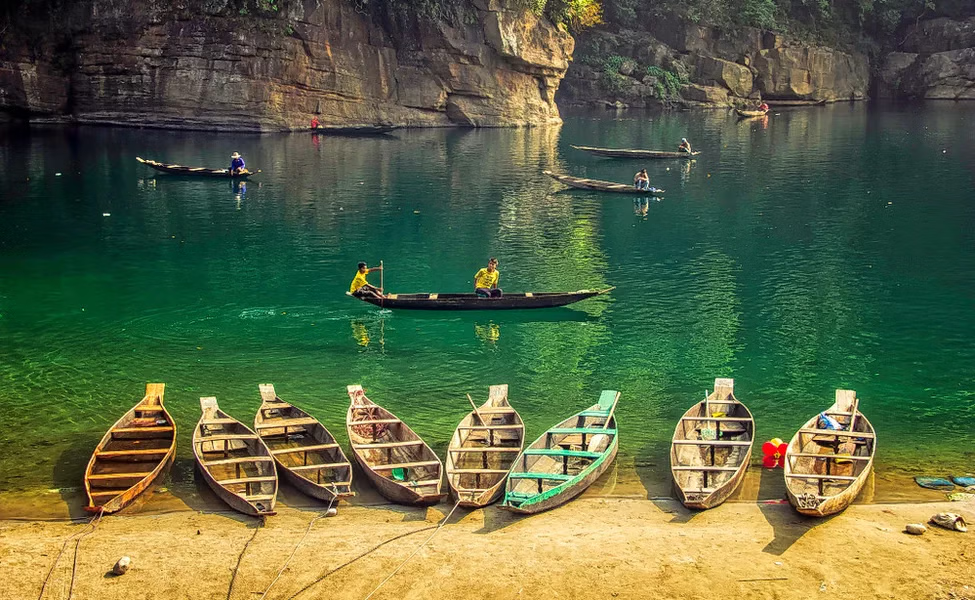
Many travelers explore the state through curated meghalaya tour packages, which help unravel its scattered gems. Shillong, the capital, is often the starting point—its mix of colonial charm, vibrant cafes, and music festivals earning it the name “India’s Rock Capital.” From there, the trails stretch wider: to Cherrapunji and Mawsynram, among the wettest places on earth, where waterfalls roar louder than conversation; to Dawki, where the river Umngot runs so clear you can see pebbles under boats that seem to float on air; and to Mawlynnong, celebrated as Asia’s cleanest village, where bamboo walkways wind through quiet, blooming homes.
The Living Root Bridges
If Kashmir has its gondolas and meadows, Meghalaya has its living root bridges. Found in Nongriat and other Khasi villages, these marvels are grown—not built—over decades by weaving the roots of rubber trees into sturdy walkways. Crossing one is surreal. You’re not just walking over a bridge; you’re walking over living history, a collaboration between people and nature that feels almost sacred.
The trek to Double Decker Root Bridge isn’t easy—it’s steep, humid, and demanding—but the moment you stand on those interwoven roots with waterfalls gushing nearby, the exhaustion melts into awe. This isn’t an experience you stumble upon anywhere else in the world.
Food and Culture That Surprise You
Kashmir and Meghalaya differ not only in landscapes but also in flavors. In Kashmir, wazwan feasts bring platters of rich, aromatic dishes—rogan josh, gushtaba, yakhni—served with an air of celebration. Even a simple cup of kahwa, brewed with saffron and almonds, tastes like a luxury.
In Meghalaya, the flavors lean earthier, fresher. Jadoh, a rice and meat dish from Khasi kitchens, is comfort food at its finest. Smoked pork is a staple, paired with fiery chutneys that wake up every sense. Meals often feel communal, tied closely to village life, where hospitality is as much a tradition as the dishes themselves.
Two Journeys, Two Lessons
What’s remarkable is how these two destinations—so far apart, so different—teach similar lessons in their own voices. Kashmir tells you about patience, about stillness, about noticing the quiet ways beauty reveals itself. You learn to sit by a lake without rushing, to watch snow fall without complaint, to walk slowly through gardens because every step offers something worth noticing.
Meghalaya, meanwhile, teaches resilience and connection. Its people live in harmony with relentless rain, turning it into an ally instead of a burden. Its root bridges prove that nature and humans don’t have to be at odds—they can create wonders together. And its landscapes remind you that sometimes the most beautiful things require effort: steep treks, muddy shoes, long rides into the hills.
Travel That Stays With You
Long after you’ve returned, these places don’t leave you. Kashmir might appear in your memory on a winter morning, when you see snow falling outside your window. Meghalaya comes back with the smell of rain or the sound of a waterfall in the distance. Both linger, not as trips you took, but as moods you once lived.
And maybe that’s what travel is supposed to be. Not just geography, not just photos, but feelings stitched into the fabric of your days—reminders that somewhere out there, lakes reflect mountains perfectly, and bridges grow from living roots, waiting quietly for you to cross them.
Closing Thoughts
India is vast, and no two journeys ever look the same. But Kashmir and Meghalaya stand out because they don’t just show you landscapes; they invite you to feel something deeper. Whether it’s through a carefully planned package from Srinagar or a guided exploration of the cloud-laden northeast, both destinations prove that travel is less about seeing and more about becoming.
And once you’ve walked through their valleys—whether snow-covered or rain-soaked—you’ll understand why people call these places not just destinations, but experiences you carry for a lifetime.